Before & After Galleries: The Secret to Selling Design Services
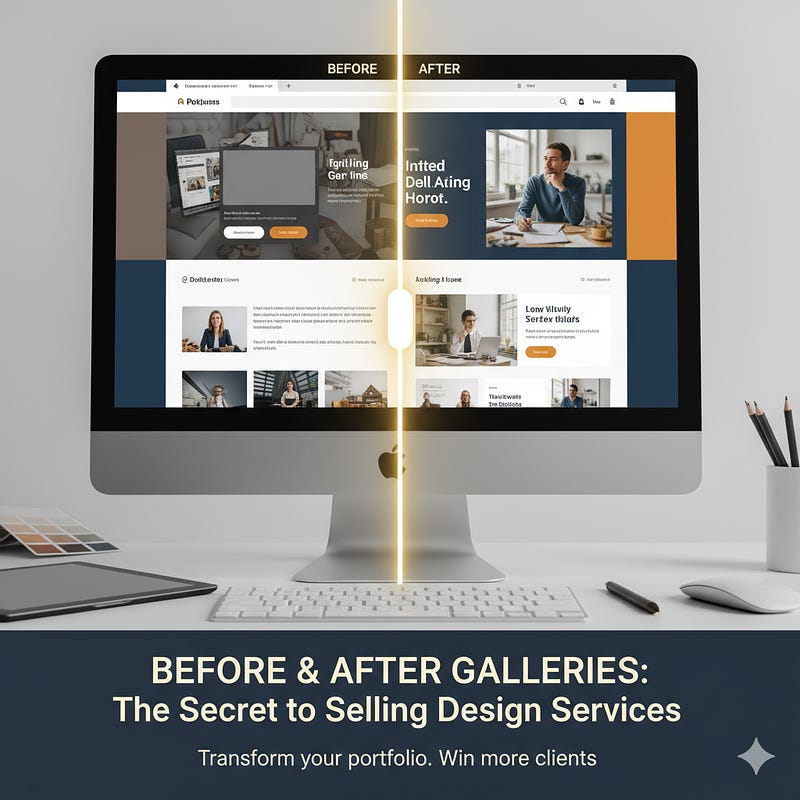
You know what’s funny? I used to think clients cared most about my tools — which software I used, what color palettes I loved, or how many revisions I offered. Turns out, they didn’t care about any of that.
What finally got people’s attention? A simple Before & After gallery.
Yep, that one little shift turned my quiet freelance page into a magnet for inquiries. Because people don’t just want to hear that you’re good at design — they want to see transformation happen right in front of their eyes.
1. The “Wow” Effect in Three Seconds
Think about this: when a client lands on your site, you’ve got maybe 3 seconds to impress them. That’s it. A strong before-and-after visual does what a paragraph of text can’t — it tells a story of progress, creativity, and results in one glance.
When I first started freelancing, I uploaded screenshots of my work on random pages, hoping someone would “get it.” They didn’t. Then I put together a small gallery showing how I redesigned a dull corporate landing page into something sleek and conversion-friendly.
Within a week? Two inquiries — both saying they “loved how you showed the improvement visually.”
That’s when it clicked.
2. Don’t Just Show the Pretty “After”
Most designers only show the final product — the polished, perfect “after.” But showing the “before” is where the trust lives.
Clients want to believe you can take their messy, outdated brand and transform it. Showing both sides proves you’re not just good — you’re adaptable.
One of my clients, a wedding planner, was embarrassed to show her old website. I convinced her to let me post a side-by-side gallery. Guess what? That post got shared three times more than any other. People love a glow-up story.
So yeah — don’t hide the “before.” Embrace it. It’s your credibility badge.
3. Build It Once. Use It Forever.
Here’s the best part: once you set up a visual gallery on your portfolio, it works 24/7. Every visitor, potential client, or even casual browser can scroll through and instantly see your growth.
And honestly? You don’t need fancy coding skills for this. Platforms like this portfolio builder for creatives make it ridiculously easy to add before-and-after sliders, photo grids, or case-study galleries without breaking a sweat.
You can upload, customize, and even tag projects by niche — web design, interior, branding, photography, you name it.
4. It’s Not Just About Design — It’s About Storytelling
Let’s be real: “Before & After” isn’t just about visuals. It’s about narrative.
Each transformation has a story — the challenge, the idea, the execution. Add a short caption beneath your gallery image:
“Client needed a rebrand that felt modern but warm. Swapped muted tones for bold color. Updated layout for clarity.”
Boom. That’s storytelling in 15 words. And it keeps the visitor curious — “What’s the next transformation?”
5. Leverage It Everywhere
Don’t just tuck your gallery inside your website and forget it. Share it:
On LinkedIn posts (people love scrollable comparisons)
On Instagram carousels (“Swipe to see the glow-up!” works every time)
In proposals — embed the same gallery to show real impact
On your blog, with quick project recaps
And yes — portfolio tools like this digital portfolio builder for designers make embedding and cross-sharing easy. It’s not just a showcase; it’s a mini marketing engine.
6. The Quiet Confidence of Showing Results
Something happens when you present your work this way — you stop sounding like you’re trying to sell. The results do the talking.
When I finally set up my “Before & After” page properly, I realized I didn’t need long sales pitches anymore. Clients saw my transformations and said, “I want that for my brand.”
That’s the kind of marketing you don’t have to explain.
7. Wrap-Up: Transformation Sells
If there’s one thing I’ve learned, it’s this: people buy transformation, not talent.
So show it. Make it visible. Let your work prove itself before you even open your mouth.
And if setting it up feels intimidating, don’t overthink it — use a tool like this portfolio creator made for visual artists. It’s quick, clean, and made for people like us who just want to design and get back to creating.
Final Thought:
Your “Before & After” gallery isn’t just about showing work — it’s about showing growth. Both yours and your clients’. And honestly? That’s the kind of story that never stops selling.
.